
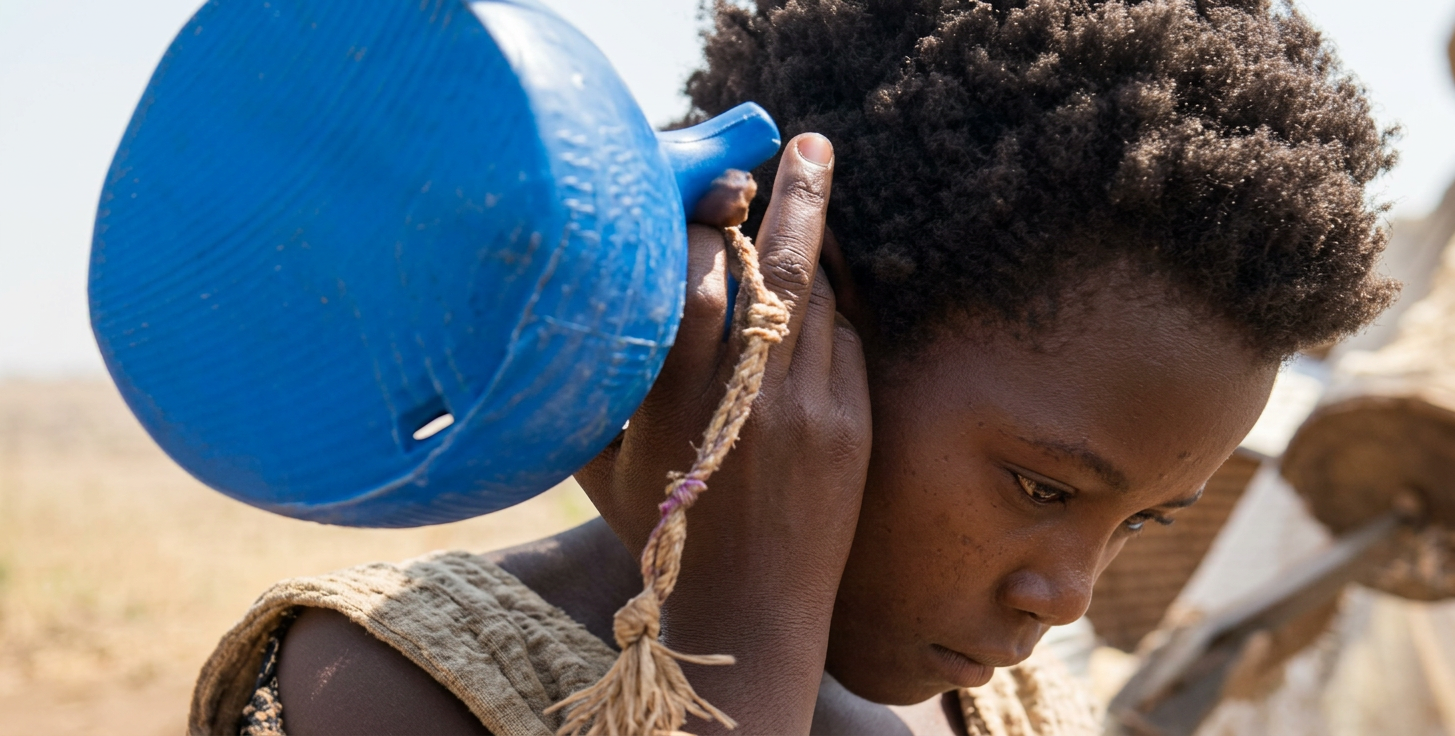
In I Am Not a Witch, the theme of othering is shown when we see Shula being treated differently from other children her age because people wanted to label her as a witch. Instead of Shula having a normal childhood and being seen as a little girl who deserves a little freedom and education, the people around her treated her as someone different from everyone else. In the film, it shows that othering allowed people to have more control and power over another person, which is seen through Shula, where people mostly controlled her every move. Two moments that stood out to me were when Shula used an ear horn (30:01) to hear different sounds, but she hears children laughing and learning in the background. What also stood out to me was when she was brought out to be on television.

Shula being able to hear the children in the background is an important moment because it reminds the people watching that Shula is still a child at the end of the day, even though society treats her as a so-called witch. Children like her are in school, socializing, and learning while Shula is separated from it all, and hearing that in the background creates this thought of the childhood Shula should be having, but we see her reality of how she lives a different life. It makes me think about how much of her life is being stripped away and the childhood she’s missing out on because of people’s beliefs. Society already decided who she was supposed to be before she got a chance to. 
Shula being shown on television stood out to me because she is being presented to the public as a witch, allowing the people watching her to judge her. The adults and the media have control over how the people perceive her, even though she’s a little girl. What then started to interest me was when a man called the network they were on, asking why Shula wasn’t in school and that Mr. Banda was using this young girl to make money and wasn’t doing what a child her age should be doing (1:02:48-1:03:19). This shows how people started seeing her differently, realizing that she is a child being taken advantage of. 

I think I Am Not a Witch shows how othering isn’t only about how people treat others as if they don’t belong, but it can also be used to control lives and take away certain opportunities from that person. Shula was treated like a witch, not a child, which allowed the adults around her to control her life. When Shula hears the voices of the children playing and learning, it reminds us of the childhood she is missing out on, while her being on television shows us how they were worried about her being a witch at first. Both of these moments tell us how people can treat someone differently without considering how that person is feeling. To me, this film shows that Shula was never the problem; it was the people who chose to treat her and see her differently.

5 responses to “Not Just A Witch”

  1. jorgeortizandino001 Avatar
    jorgeortizandino001

    I really liked your analysis of the film. Two moments that stood out to me were when they discussed the ribbons and how their length represents the amount of freedom the women are allowed to have. Another moment was when Shula listened to the children laughing at school. To me, that laughter represented the freedom she was searching for throughout the film. The theme of freedom appears again and again, especially through Shula’s desire to become a goat. However, the thought of what she would have to give up afraid her. I Am Not a Witch shows how being seen as “different” can make someone feel like they no longer belong in society. The ribbons become a symbol of the oppression women face, while accusing them of being witches is another way to control them and make others look down on them.

    Liked by 1 person

  2. pavelaquino001 Avatar
    pavelaquino001

    I would say that in I Am Not a Witch, society’s fear of what it does not understand allows people to judge others without knowing their true identity. This is shown when Shula is labeled a witch instead of being treated like a normal child. When she appears on television, people see her through the label that adults have given her rather than recognizing her as a young girl who deserves an education and freedom. However, when a man questions why Shula is not in school and accuses Mr. Banda of using her for money, it shows that some people begin to question how she is being treated. This suggests that people should question society’s beliefs instead of accepting them without thinking about how they affect others.

    Liked by 1 person

  3. adorosario001 Avatar
    adorosario001

    Great Job! Your analysis of the film is very strong and I think you used a critical reference from the movie to support your analysis. Pointing out how Shula is a child even though everyone does not treat her like one and using the part about her having to hear other kids in the background living a normal childhood does show how much was withheld from her. She had to miss out on what could have been due to the misconceptions surrounding her community. Which was also really important because this all goes to show that people can take advantage of someone or use them without thinking of the repercussion that the other person may endure. The people in Shula’s community took advantage of her their beliefs and in doing so, took away her childhood, freedom and life.

    Liked by 1 person

  4. andrewliu003 Avatar
    andrewliu003

    I agree with your idea of how othering isn’t just treating others like they don’t belong and instead being the idea of controlling others. Another scene I wanted to bring up was when the tourists see Shula inside the shell like thing in the wild, the tourists, while trying to act empathetic only really cared about looking like they cared with their pictures and wanting Shula to perform for them. Another scene would be the police station at the start of the film where many of the random citizens who have no connections all want to paint Shula as a witch with no reason to do so. The people in Shula’s life who painted her as a witch, none of them really had a reason to do so, but they all wanted to be in control which contributed to Shula being forced into becoming a witch.

    Liked by 1 person

  5. AHMED ABDUL RAHEEM LNU Avatar
    AHMED ABDUL RAHEEM LNU

    I agree with your point that I Am Not a Witch shows how othering can take away a child’s freedom and opportunities. One thing that stood out to me in your analysis is how Shula is treated as a witch instead of being recognized as a young girl who deserves an education and a normal childhood. I also think the moment when the man calls the television network is important because it shows that some people are beginning to question how Shula is being treated. While the adults around her use the label of a witch to control her, the caller recognizes that she is a child who should be attending school rather than being used for other people’s benefit. This connects to the moment when Shula hears children laughing and learning in the background because it reminds us of the life she could have had if society had not labeled her as different. Both scenes show how powerful labels can be when people accept them without questioning the truth. Overall, I think the film encourages us to look beyond the labels society places on people and recognize their humanity, especially when those labels are used to control or take advantage of them.

    Liked by 1 person

Leave a Reply